About "NTPL" MAKE 100 KV /100mA AC HIGH VOLTAGE Test Set SERIES : AHVMTOC2 TYPE : 100K100m
Technical Features:
Input: 230 Volts, single phase, 50Hz, AC.
Output : Continuously variable from 0 to 100KV.
Capacity : 100mA max. at HT side.
Duty : The Test Set will be designed for Intermittent rating, as per requirement of test intervals.
Nature of Cooling: The Transformer will be type.
Output voltage variation: By means of motor driven arrangement.
Approx.rate of rise of output voltage 2KV/sec.
Overload Tripping adjustment: At 25mA, 50mA & 100mA AC.
Over Voltage Indication & Interlock Protection provided.
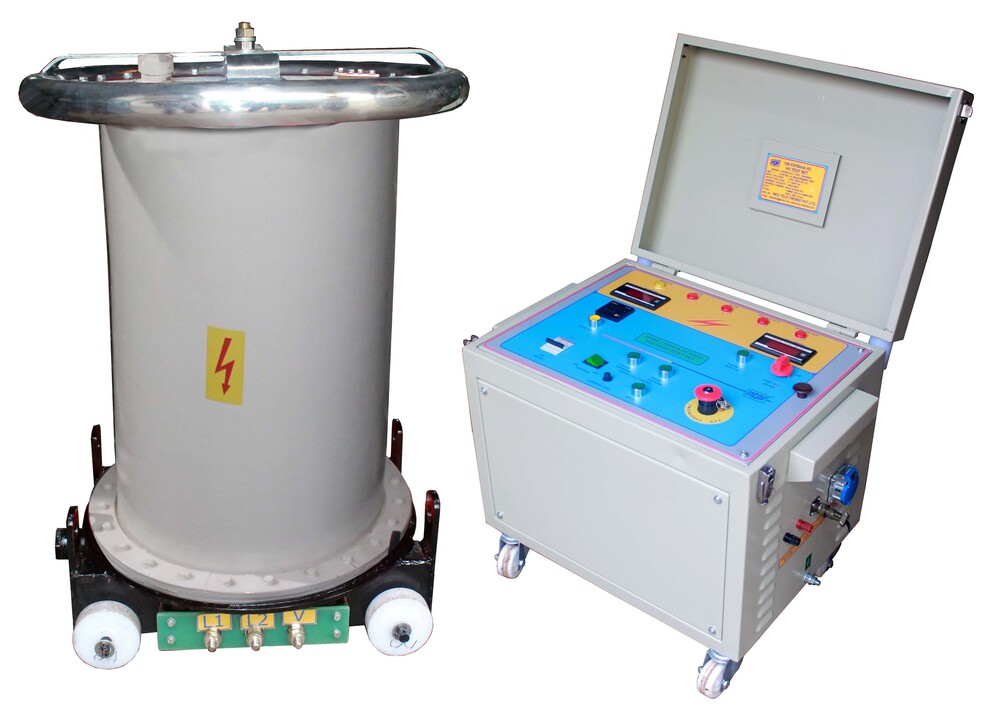
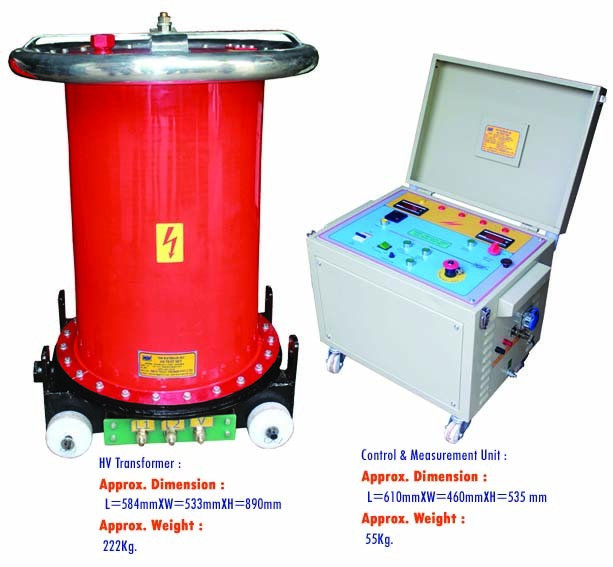
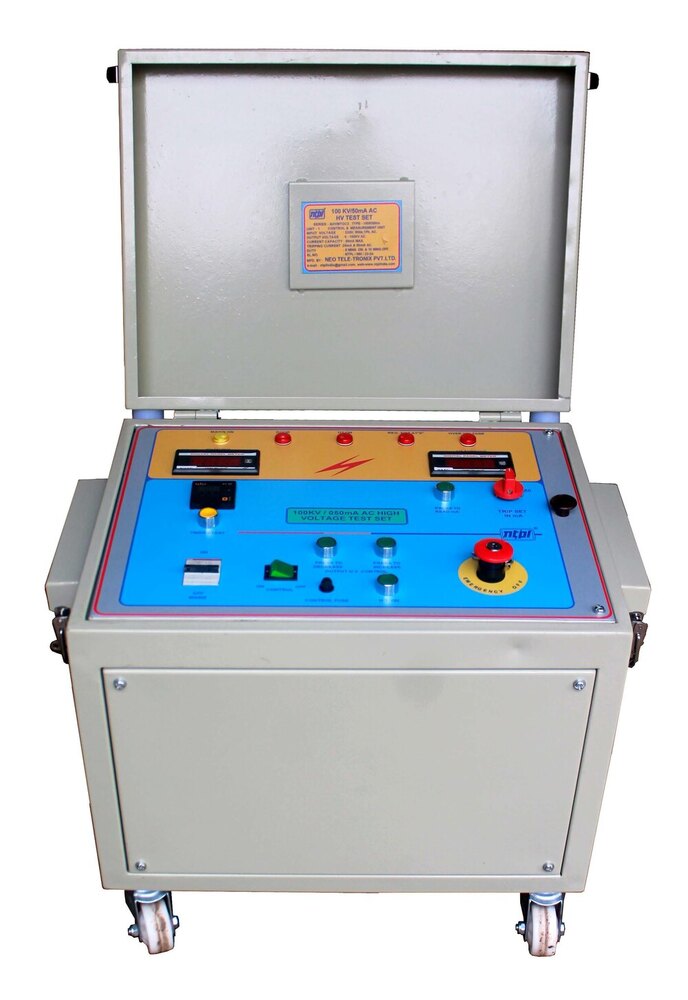
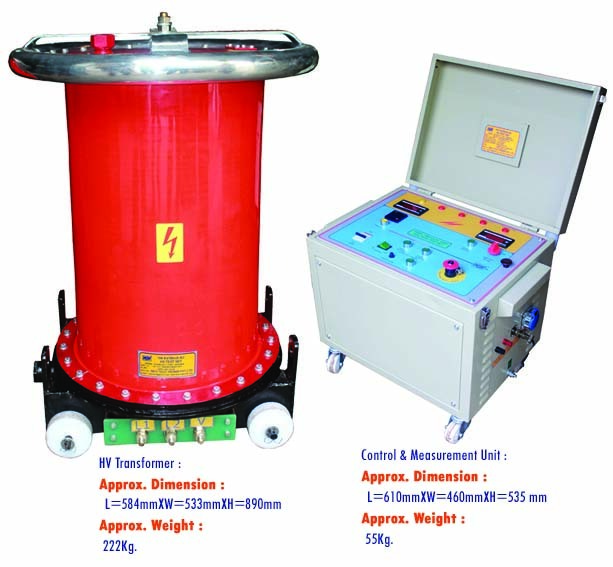
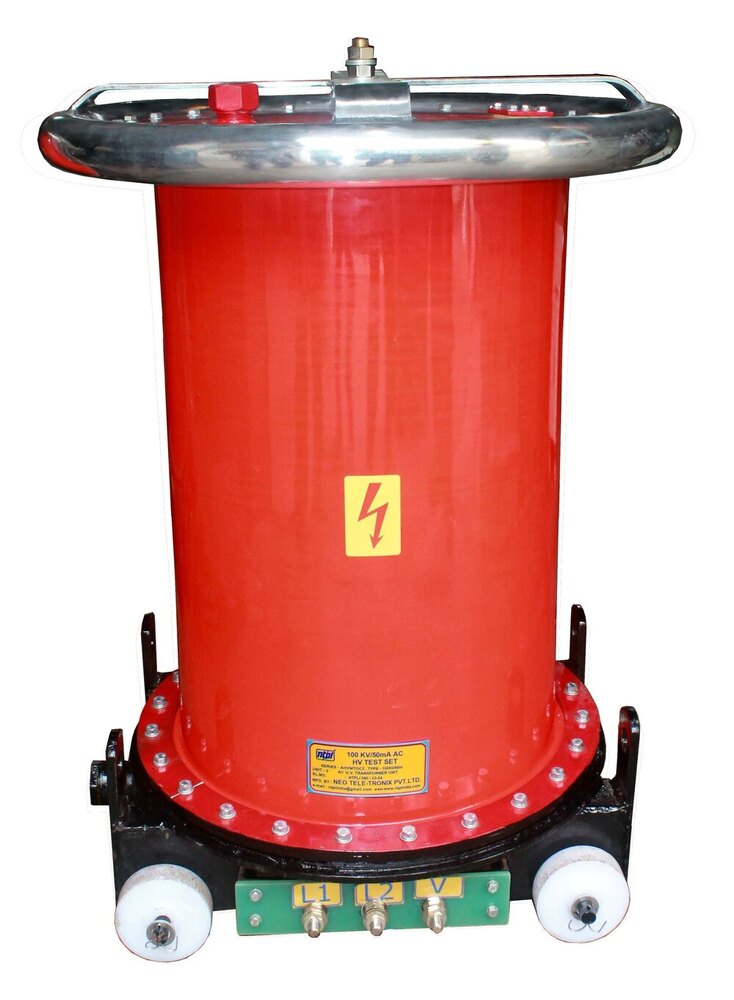
The above test kit will be in 2 units i.e.
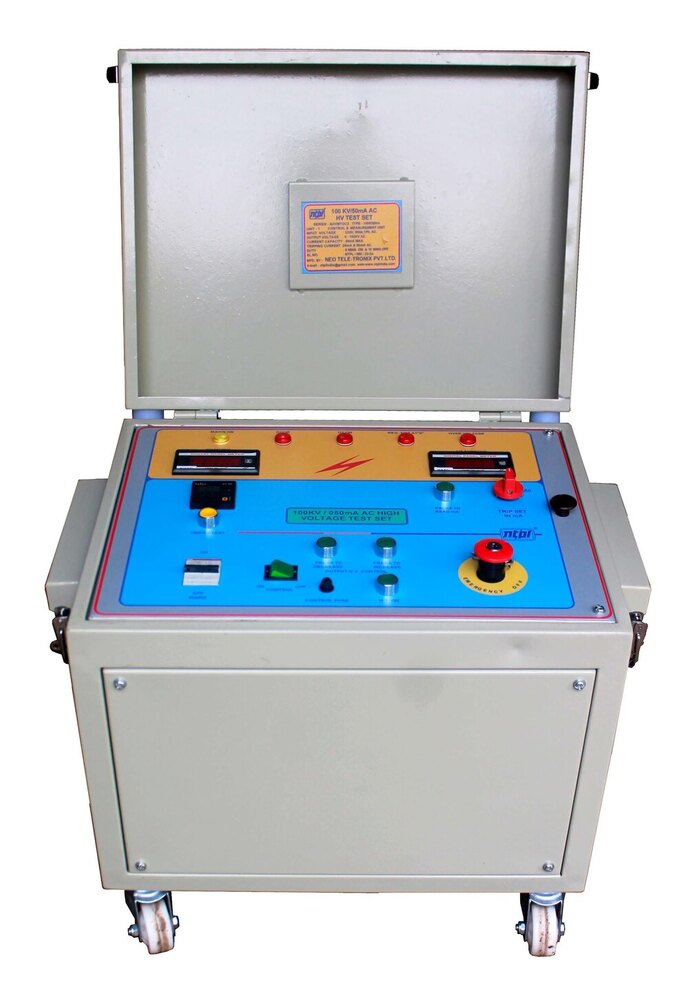
1. Control & Measurement Unit.
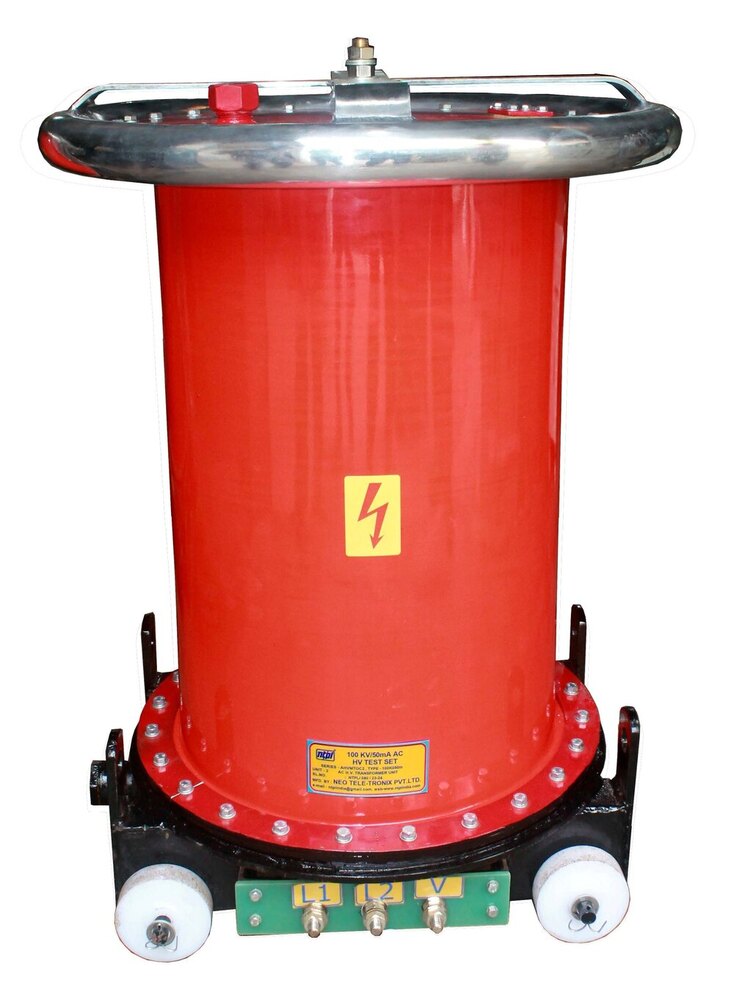
2.AC HV Transformer Unit. Power Mains ON OFF operation is done by means of an ON OFF switch along with 'MAINS ON lamp indication & Fuse.
All the above units will be provided with wheels for easy movement.
Superior Dielectric Testing SolutionThe AHVMTOC2 100K100m High Voltage Test Set from NTPL delivers a powerful solution for verifying the dielectric integrity of cables, insulation, and transformers. With its adjustable output voltage and current, operators gain full control over test parameters. The oil-cooled, epoxy potted transformer design promises long-term performance and operator safety is ensured through advanced protection systems and a dedicated control panel.
Advanced Protection and Safety FeaturesDesigned for safe operation, this test set integrates automatic tripping on overcurrent or earth leakage, heavy-duty earth terminals, and safety interlocks. Its automatic discharge device and insulated compartment ensure hazards are minimized, supporting compliance with IS 2071 and IEC 60060. The rugged construction with a moisture-resistant, shockproof enclosure further enhances safe daily use.
Precision Measurement and Easy OperationHigh-accuracy digital or analog meters provide precise readings of output voltage and current. The continuously variable variac allows seamless control of test voltages, adapting easily for various applications. A dedicated metering panel separates control from measurement, reducing risk and simplifying operation for the user.
FAQ's of "NTPL" MAKE 100 KV /100mA AC HIGH VOLTAGE Test Set SERIES : AHVMTOC2 TYPE : 100K100m:
Q: How does the NTPL 100K100m HV Test Set ensure operator safety during high-voltage tests?
A: The test set features several safety mechanisms, including an automatic discharge device, interlocked operation panel, heavy-duty earth terminals, and integrated protection against overcurrent and earth leakage. Its separate control and measuring panel allows the operator to remain at a safe distance from high-voltage components.
Q: What types of equipment can be tested using this 100 kV AC High Voltage Test Set?
A: This HV Test Set is designed for testing the dielectric strength of cables, insulation materials, and transformer windings, ensuring their ability to withstand high voltages under operational conditions.
Q: When should I use the test set's automatic trip feature?
A: The automatic trip feature is active during all high-voltage tests and protects both the equipment and operator by immediately disconnecting output in case of earth leakage or overcurrent situations, following best safety and operational practices.
Q: Where should the NTPL 100K100m Test Set be installed for optimal operation?
A: The test set should be installed indoors on a firm surface with adequate ventilation for natural air cooling. Ensure it is placed in an environment within the operating temperature range (0C to 50C) and that proper earthing is maintained for safety.
Q: What is the process for controlling output voltage and current during testing?
A: The output is controlled using a variac, allowing for smooth and continuous adjustment from 0 up to 100 kV and 0 to 100 mA. The operator monitors the test using the digital/analog kV & mA meters providing real-time measurements for accurate control.
Q: How does this HV Test Set benefit users in industrial applications?
A: Users benefit from precise, reliable dielectric strength testing with built-in safety features and durable construction. It ensures compliance with industry standards, enhances equipment maintenance regimes, and reduces risks associated with electrical insulation failures.







 Send Email
 Send Inquiry

 Send Inquiry

 Send Inquiry
 Send SMS